
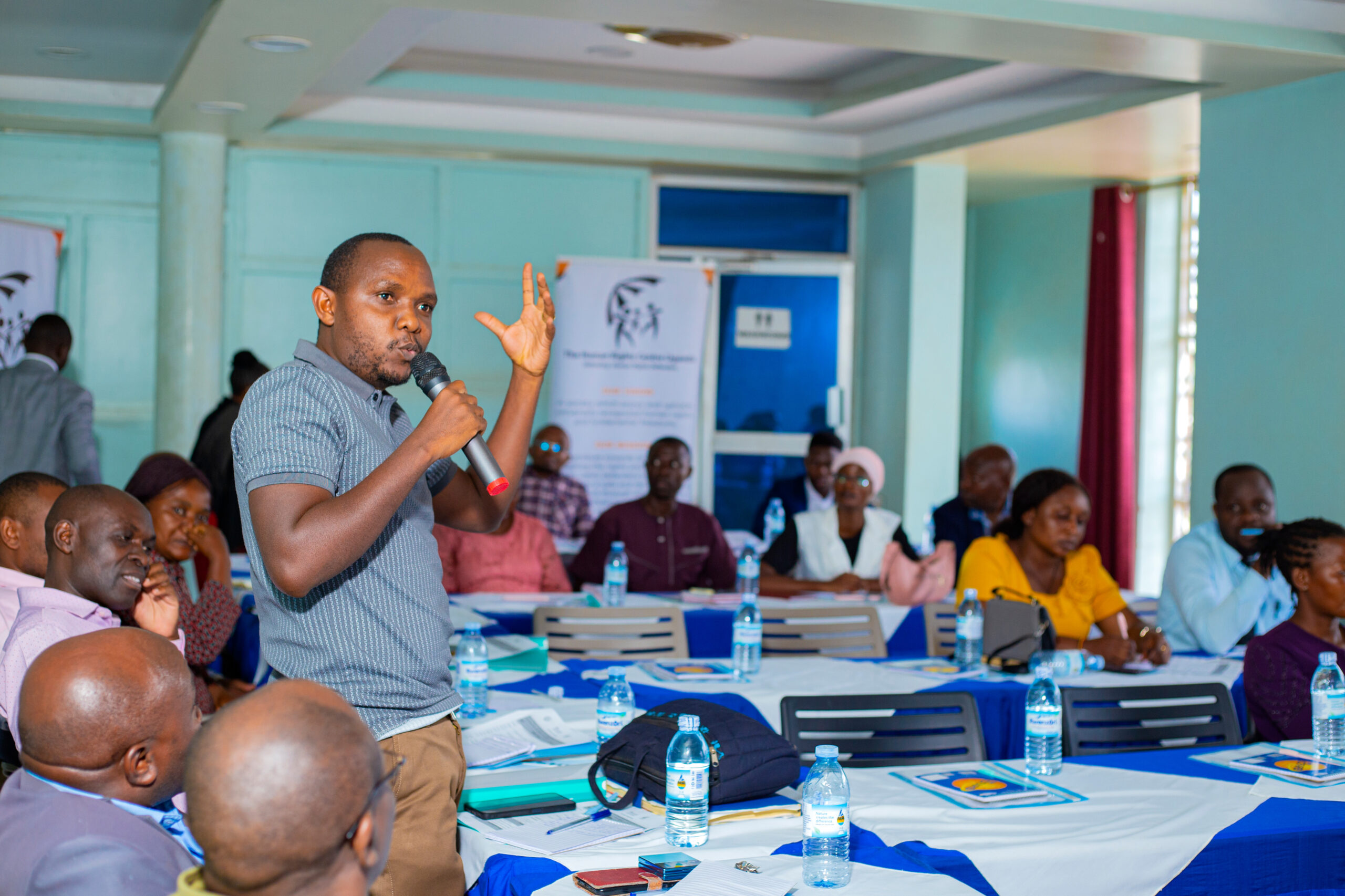
HRCU Brings Rwenzori Stakeholders Together to Strengthen NGO-Government Relations.
-
by
HRCU
- No Comments on HRCU Brings Rwenzori Stakeholders Together to Strengthen NGO-Government Relations.
The Human Rights Centre Uganda (HRCU) in partnership with the National Bureau for NGOs (NGO Bureau), convened a two-day regional reflection meeting in Kasese, bringing together stakeholders from across the Rwenzori Sub-region to deepen understanding of Uganda’s regulatory framework governing the work of Non-Governmental Organisations (NGOs).
Held on 22-23 September 2026, at Kamwe Kamwe Hotel in Kasese, the two-day reflection meeting brought together 30 stakeholders, including representatives from the NGO Bureau, NGO leaders from Kasese, Ntoroko and Bundibugyo, as well as members of the District NGO Monitoring Committees.
The meeting focused on improving stakeholders’ understanding of the legal and policy framework governing NGOs and clarifying the respective responsibilities of NGOs and government regulators.
For NGOs, the discussions provided an opportunity to better understand their compliance obligations under Uganda’s NGO regulatory framework. For regulators, the meeting provided space to reflect on their statutory oversight mandate and its scope in relation to the work of NGOs.
Under the NGO Act, Cap. 109, District NGO Monitoring Committees are established to monitor the operations of NGOs within their respective districts and make recommendations to the NGO Bureau regarding the registration of organisations. The meeting therefore provided an important platform for NGOs and the committees responsible for their oversight to discuss their respective roles and how these can be exercised in a manner that supports effective NGO operations.
Participants reviewed Uganda’s NGO laws and regulations and reflected on policy and legal developments affecting the regulation of NGOs. They also discussed emerging issues affecting the operations of NGOs, including funding constraints and the challenges these present for organisations working to sustain their programmes and services.
The discussions further touched on the importance of risk mitigation and compliance measures to prevent NGOs from being exposed to risks associated with money laundering and terrorism financing. Participants considered the responsibility of NGOs to maintain appropriate safeguards while regulators provide oversight within their statutory mandate.
Speaking during the meeting, HRCU Head of Programmes, Mr. Eric Namungalu, noted that NGOs play a complementary role in supporting government’s work and described government and civil society as “two sides of the same coin.” He reaffirmed HRCU’s commitment to working with government and other stakeholders to advance civic space and contribute to Uganda’s development.
The meeting also emphasised the importance of constructive engagement between NGOs and government. A good working relationship between the two goes a long way in creating an environment where NGOs can operate within the law while effectively responding to the needs of communities.
The meeting ended with a commitment from stakeholders to continue working together. Kasese District Principal Community Development Officer (CDO), Mr. Wilson Lhughabwe, emphasised that NGOs and government must work together because they share a common purpose of serving the people of Uganda.
Mr. Lhughabwe described the meeting as timely, noting that it provided an important space for stakeholders to engage on issues affecting the NGO sector at a time when many organisations were still facing challenges in their operations. He encouraged continued engagement between NGOs and government as a means of addressing these challenges and improving the working relationship between the two sides.
The Kasese reflection meeting forms part of HRCU’s broader work to promote civic space through dialogue and sustained engagement between civil society and government. Through such engagements, HRCU seeks to create greater understanding between NGOs and regulators and support a working relationship that allows both sides to perform their respective roles effectively.
The commitment from both NGOs and government to continue engaging marks an important step towards building a more constructive relationship in the Rwenzori Sub-region, where both sides can work within their respective mandates while keeping the interests of the communities they serve at the centre.
Written by
Keneth Kitambula- Programme Officer- Advocacy